





Latest Article
Baby Stuffy Nose & Cough but No Fever: When to Call a Doctor
Manage a baby's stuffy nose and cough without a fever via home care for infants over three months. Younger babies require immediate pediatric evaluation.
How Does a Baby Monitor That Tracks Breathing Work?
Baby monitors that track breathing do not directly measure the air moving in and out of a baby’s lungs. They detect breathing-related movement through sensors, video analysis, pressure changes, or contact-free radar. This guide explains how the main technologies work, what tradeoffs parents should consider, and where a contact-free option like Momcozy BM08 may fit for everyday home monitoring.

Is a Smart Baby Monitor Worth the Price? Your Complete Parent Guide
Smart baby monitors can be worth the higher price when parents will actually use app viewing, smart notifications, sleep trend summaries, or contact-free monitoring. This guide explains when the upgrade makes sense, when a simpler monitor may be enough, what hidden costs to check, and where Momcozy BM08 fits as a no-wearable smart option based on current product information.
How Smart Baby Monitors Help With Sleep Training
Parents often ask how smart baby monitors help with sleep training. This guide explains how video monitoring, smart notifications, sleep trend review, and two-way audio can support nighttime routines without replacing safe sleep practices, adult supervision, or pediatric advice.
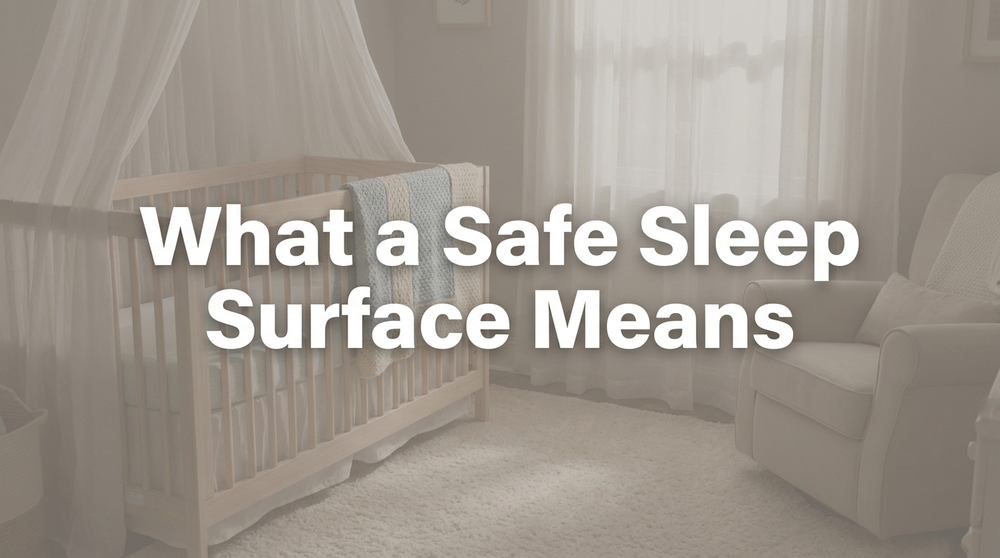
What a Safe Sleep Surface Means
A safe sleep surface stays firm under your baby's body and flat and level under the head and airway. Both matter because a surface can be flat but too soft, or
Is Using a White Noise Machine During Sleep Safe for Infants?
Usually, yes, a white noise machine can be part of an infant’s sleep routine if it stays far from the baby, low in volume, and limited in duration . It is a com

What WHO and CDC Guidelines Actually Say About Sterilizing Baby Bottles
The short answer is: no, not every family needs to boil every bottle after every single feed forever. For everyday home use, the CDC’s current guidance says bot
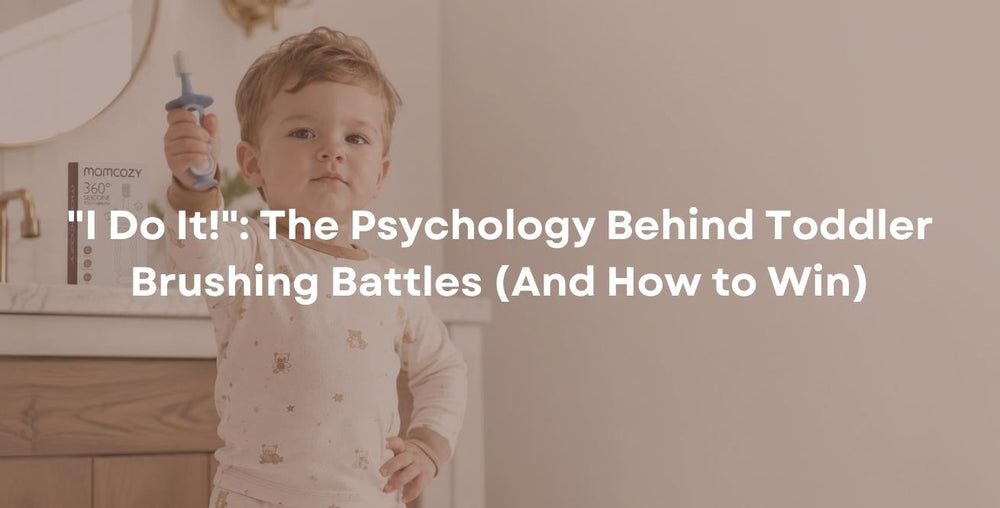
"I Do It!": The Psychology Behind Toddler Brushing Battles (And How to Win)
The Daily Struggle of Toddler Brushing You’ve set up the perfect bedtime routine: a warm bath, cozy pajamas, and a sweet story. But the moment you bring out the toothbrush, the peace shatters. Your toddler clamps their jaw shut, turns their head away, or pushes your hand. If you are dealing with this exhausting nightly wrestling match, take a deep breath. You are not failing as a parent. In fact, your child is going through a completely normal, healthy stage of brain development. It’s Not Defiance, It’s a Crucial Developmental Milestone Between the ages of 12 and 36 months, your baby’s brain undergoes a massive rewiring. While it is easy to view their sudden refusal to cooperate as simply "being naughty," modern developmental science offers a much more empowering perspective for exhausted parents: they are simply discovering their independence. According to a highly cited 2007 study published in the journal Child Development (Dix et al.), what parents often perceive as "stubborn defiance" is actually a highly positive marker of emerging autonomy. The researchers found that a toddler's resistance during daily routines—like brushing their teeth or getting dressed—is not malicious. Instead, it is a healthy, necessary assertion of self. They are actively testing boundaries to figure out where your control ends and their independence begins. Furthermore, contemporary child psychology places a heavy emphasis on the concept of bodily autonomy. As highlighted in modern research (such as Grolnick & Pomerantz, 2009), toddlers have very few things they can actually control in their lives. When an adult aggressively comes at their face with a long plastic stick, it feels deeply invasive. Clamping their mouth shut or pushing your hand away is their natural, healthy defense mechanism to protect their own body. They are communicating a fundamental psychological need: "I want to control myself." The Danger of Forced Brushing When you are exhausted and just want to get your child to bed, it is incredibly tempting to hold them down and force the brushing. However, pediatricians and child psychologists warn against this approach. The American Academy of Pediatrics (AAP) emphasizes that the goal of early oral care is not just to clean teeth, but to build lifelong healthy habits. Forcibly pinning a child down to brush their teeth can turn a basic hygiene routine into a traumatic experience. Over time, this forced compliance can lead to a deep-seated fear of dental care (dentophobia) and turn every future brushing session into an anxiety-inducing battle for both of you. How to Win: Hand Over the Control (Safely) If your child is desperate for control, the smartest psychological "hack" is to give it to them. Let them say, "I do it!" However, handing a standard, long-handled toothbrush to a wobbly toddler is a recipe for gagging and poor hygiene. You need a tool that balances your child's need for control with a mother's need for effective cleaning. Enter the Momcozy 360° Silicone Baby Toothbrush. [product_shortcode_1] Designed specifically for the independent toddler phase, this brush solves the psychological battle while guaranteeing a clean mouth: The Safety Guard for Independence: The built-in anti-choking shield prevents the brush from going too far into the mouth. You can confidently hand the brush over, knowing your toddler can practice brushing completely safely without gagging. They get the control they crave; you get peace of mind. 360° Bristles for "Blind Brushing": Toddlers don't know the proper brushing techniques. With the Momcozy 360-degree bristle design, it doesn't matter how your toddler bites, chews, or twists the brush. Every angle is a cleaning angle, effectively removing plaque and food residue even if they are just playing with it. Soft, Soothing Silicone: Made of 100% food-grade silicone, the bristles are ultra-soft. They protect delicate enamel and soothe sore gums from late-erupting molars, making brushing a comfortable sensory experience. Toddlerhood is a tug-of-war, but brushing their teeth shouldn't be. By understanding the psychology of the "I Do It" phase and upgrading your gear to support their independence, you can protect their mental well-being and their physical smile. Give them the right tool, step back, and watch them proudly take charge of their own routine. References: ZERO TO THREE. "Toddlers and Challenging Behavior: Why They Do It and How to Respond." Zerotothree.org.Available at: https://www.zerotothree.org/resource/toddlers-and-challenging-behavior-why-they-do-it-and-how-to-respond/ American Academy of Pediatrics (AAP). "Brush, Book, Bed: How to Structure Your Child's Nighttime Routine." HealthyChildren.org.Available at: https://www.healthychildren.org/English/healthy-living/oral-health/Pages/Brush-Book-Bed.aspx American Dental Association (ADA). "Healthy Habits for Babies and Kids." MouthHealthy.org.Available at: https://www.mouthhealthy.org/life-stages/babies-and-kids/healthy-habits-babies-and-kids Dix, T., et al. (2007). "Autonomy and Children's Reactions to Being Controlled: Evidence That Both Compliance and Defiance May Be Positive Markers in Early Development." Child Development, 78(4), 1204–1225.Available at: https://srcd.onlinelibrary.wiley.com/doi/10.1111/j.1467-8624.2007.01061.x(Note: This peer-reviewed study demonstrates that toddler resistance is a normal, positive sign of developing autonomy rather than misbehavior.) Grolnick, W. S., & Pomerantz, E. M. (2009). "Issues and Challenges in Studying Parental Control: Toward a New Conceptualization." Child Development Perspectives, 3(3), 165–170.Available at: https://srcd.onlinelibrary.wiley.com/doi/10.1111/j.1750-8606.2009.00099.x(Note: This paper discusses the critical difference between supportive guidance and invasive control, emphasizing a child's need for bodily autonomy.)

New Dad Guide: Parenting Advice for First-Time Fathers in 2026
Help for first-time fathers, expectant fathers, and new dads in early parenting with the New Dad Guide 2026. It covers newborn care and emotional readiness, and provides easy, actionable guidance for new parents. From the start, this guide shows how to be a good dad and build positive father-child relationships.
EXPERT Spotlight


Popular Pregnancy & Postpartum Tools

Baby Name Generator
A name is the first gift to your beloved baby. Find the perfect name for your baby

Pregnancy Weight Gain Calculator
Track your pregnancy weight gain and get personalized recommendations based on your pre-pregnancy BMI.

Chinese Gender Prediction Calculator
Legend has it that this ancient Chinese gender prediction chart was discovered in a royal tomb near Beijing over 700 years ago.

Due Date Calculator
Using our Pregnancy Due Date Calculator, you can estimate your due date based on your last menstrual period, conception date, IVF transfer, or ultrasound.